



The Grit is a Club Reticent series where I have beautiful conversations with my favorite women about their creative lives – unpredictability to craft.
Dia Lupo is the writer of a cult beauty newsletter Broke but Moisturized. She’s also a mother, a suburban chic advocate, and the most intellectually diversified person alive: if I ever need advice on lip combos, Dia is my person. If I ever need to ponder on my Sisyphean existence as a writer with a humble background, Dia is, once again, my person. I’m still unsure if she is the oracle or if I’m being parasocial. It could be both.
What makes Broke but Moisturized so beloved is Dia’s poignant wit and sharp humor, but also the warmth that comes through in every sentence. Her readership is a secret club of brilliant, funny women hungry for truth and amusement in the ordinary crevices of life. And Dia provides just that – on a weekly basis at that! There are still blessings and wonders pure of heart in the cultural panopticon.
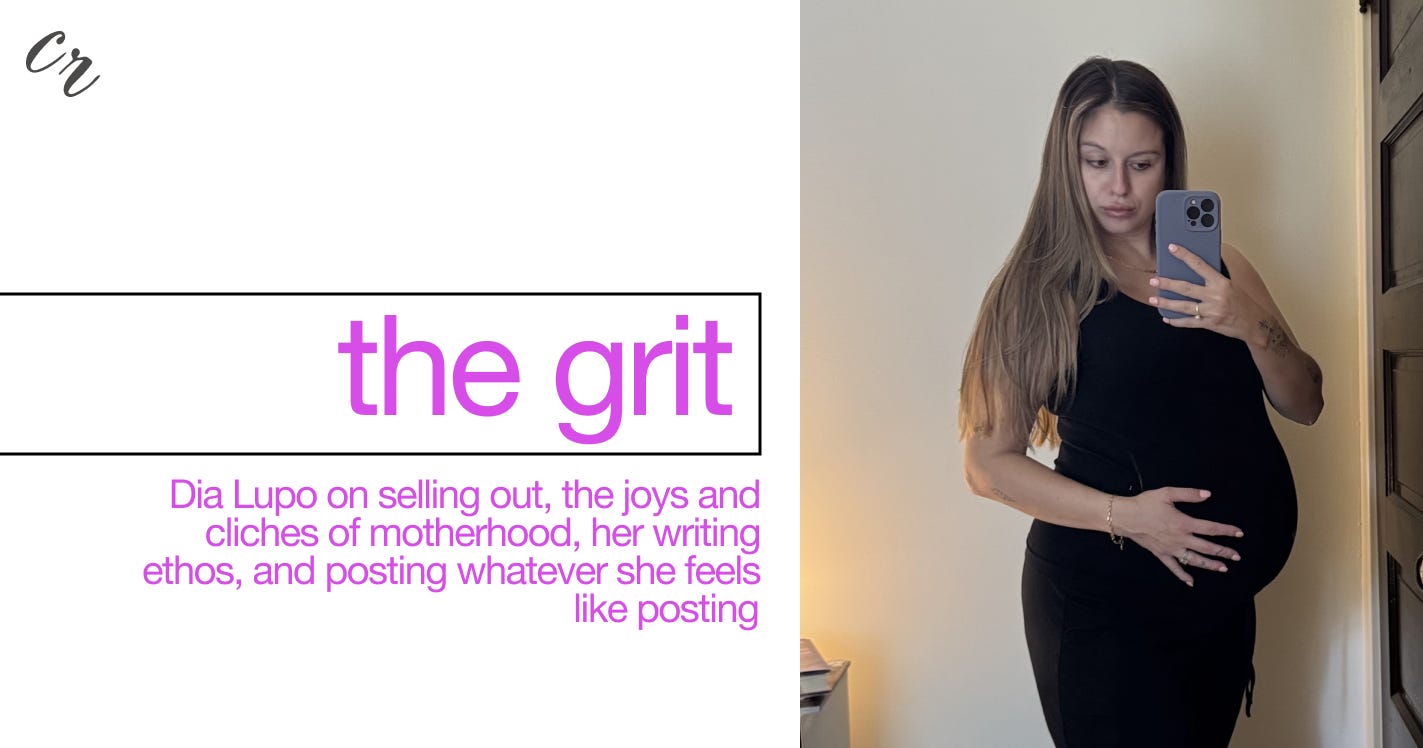
In this installment of The Grit, we talk about motherhood and its cliches, reflections on progress and success, our love for Sam Kriss and a shared fascination with big tech and Silicon Valley, and why both of us are not opposed to selling out.
Valerie: You describe Broke but Moisturized as a newsletter on beauty and aging. Why are these the two themes you chose to explore?
Dia: For a really long time, I was struggling to identify and quantify what Broke but Moisturized was. When people would ask me what I write about, I really struggled with that question, and I’m somebody who’s obviously very language-driven, so that bothered me a lot. Today, I would say beauty and aging are the two themes that touch every aspect of my life. I am interested in reframing how we talk about beauty, because it’s not just recommendations and trends – it’s how we exist in the world and communicate with it.
V: Could you walk me through the journey of finding your voice? Did you always feel like you had this distinct expression, or was it more of a terrain?
D: I think I always had my voice, and that was what made me want to write. I love speaking and I’m a total extrovert, but writing is how I express myself most poignantly. I’ve learned to write through reading so much over the years, and I’ve been very strategic about my reads. I read to become a better writer.
V: And what is it you’re strategically reading?
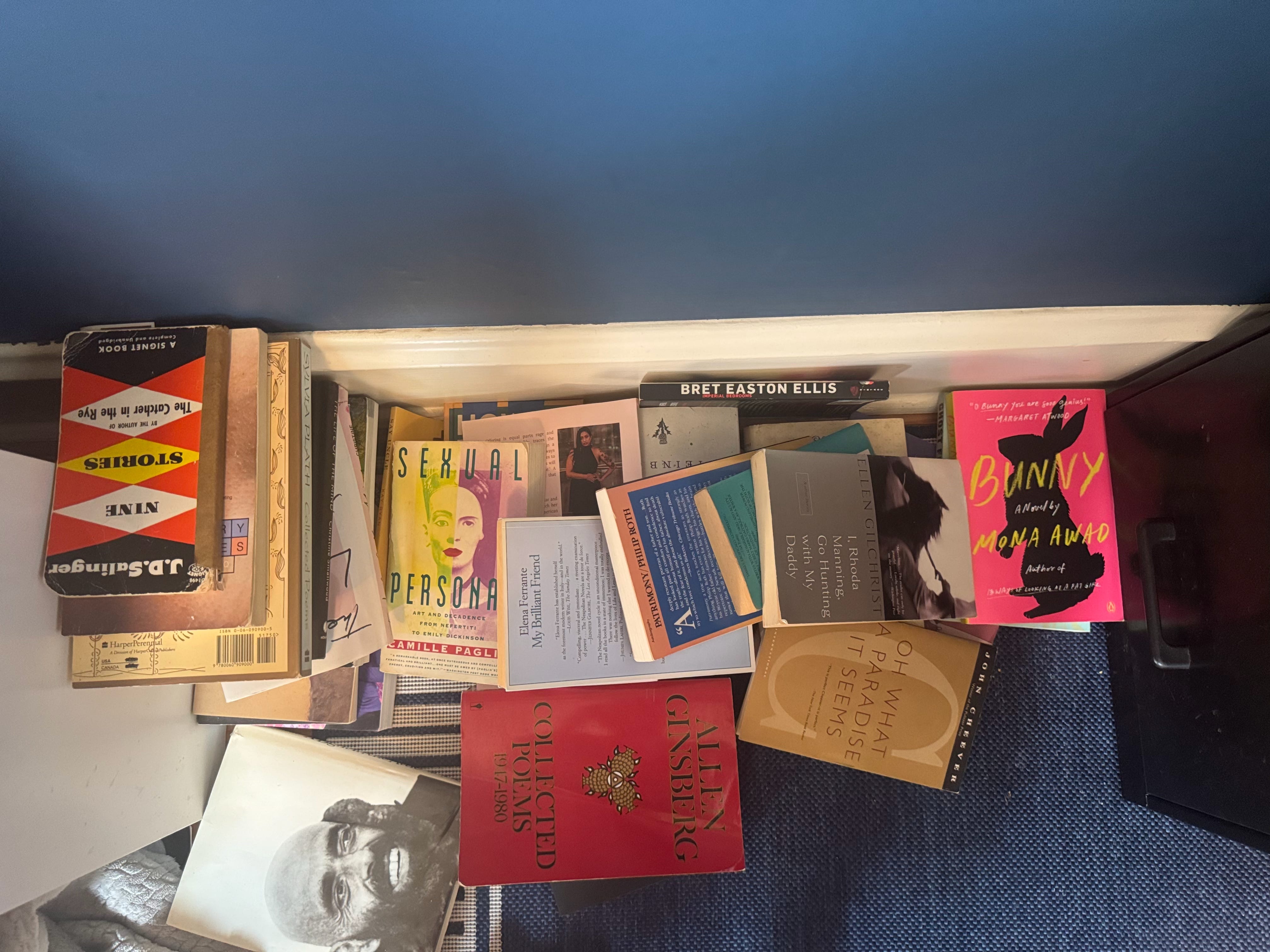
D: I like Philip Roth, I like Salinger, Henry Miller. These are the people who have influenced my voice, especially since they’re a little bit more “crass”. James Baldwin is a master of dialogue and really enchanted prose. I like writers with a lot of texture and urgency, and I guess I found a lot of that in reading men, strangely.
V: You yourself have such an uninhibited online presence. Does that take anything to maintain or curate, or does it come naturally?
D: I wouldn’t say it takes curation, but it’s a distraction. I can’t help but post whatever I feel like posting, but it’s probably more of a negative: I’m burdened by my need to just shoot from the hip. I am not a private person whatsoever, and that’s for better or worse. I’m not the person who’ll go up to you and dump my life story on you, but you can pretty much ask me any question and I’ll answer it honestly.
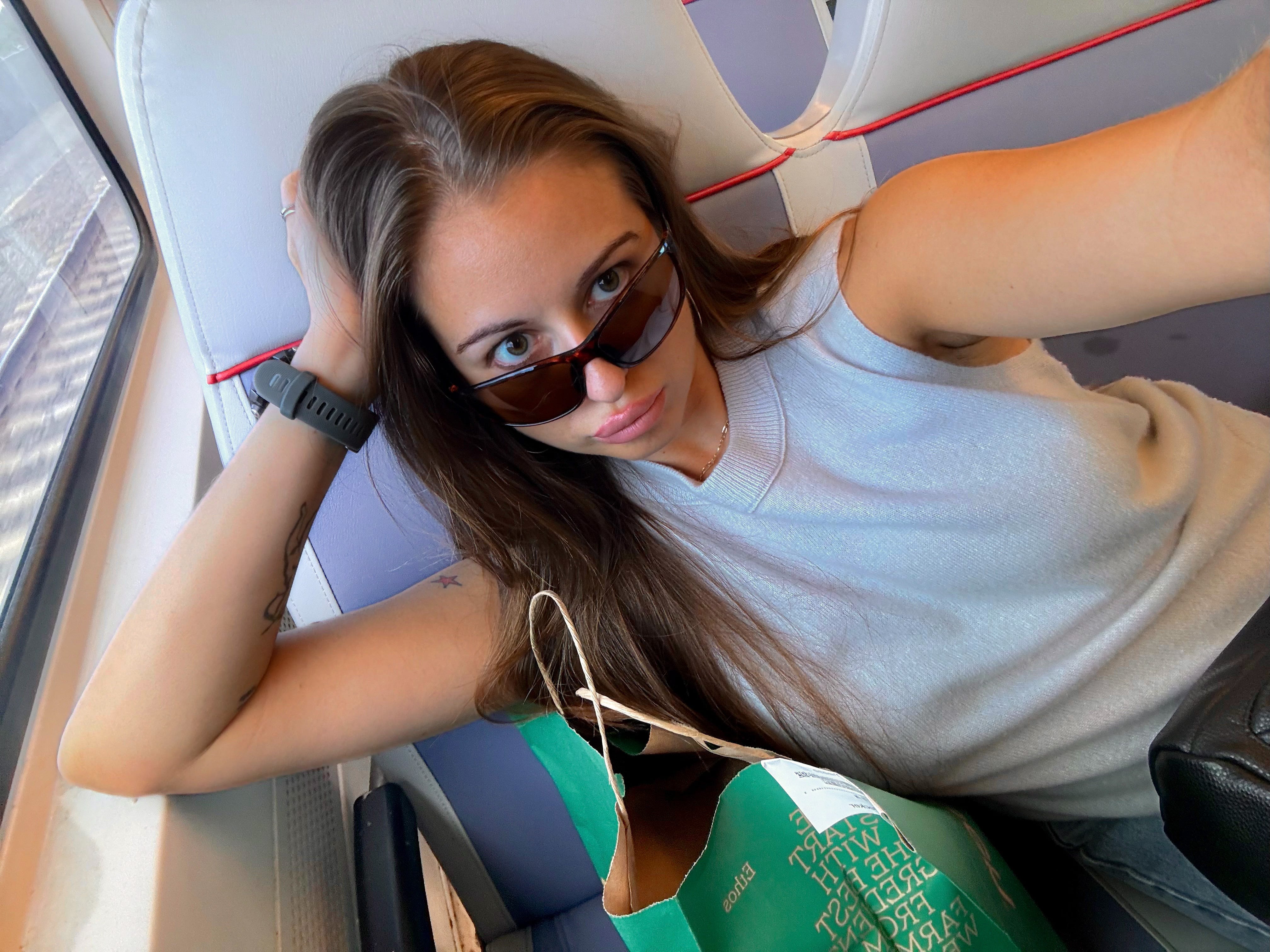
V: I think that’s what attracts so many people to your writing and makes them feel personally involved. You’re keeping it real on the internet. But what are the downsides of that and exposing parts of yourself? This is something I think about a lot when it comes to us, female writers.
D: Definitely. There are parasocial relationships, which come in many forms — maybe the funniest being people I’ve never interacted with whatsoever who send me memes. It can be awesome, but there are downsides, because you only have so much time in a day to respond and engage.
V: And does #keepingitreal online reflect in your everyday life?
D: I think so. My husband is very private. That’s something to consider with everything I do: the respect for my partner’s and family’s privacy. I’ve gotten into family fights because of writing about them and my upbringing, and it’s actually been a generative discussion between us. So my writing has definitely compromised, or at least changed, certain aspects of my real-life relationships. But for the better, I would say.
V: Do you ever feel under pressure in your process?
D: Yeah, definitely. I feel a lot of pressure to produce and to be consistent, and I struggle a lot with that on top of having a full-time job and a baby. I don’t feel so much pressure in the quality of what I put out, or the subject matter: I’ve been on Substack long enough to not be super precious about it. That’s partly why I pivoted to more of a diaristic style, because it allowed me to emphasize my voice. It not only helps me meet deadlines, because I’m literally just writing about my life and I write throughout the week and then coalesce everything, but it’s also helped me stay true to my voice without getting pulled too far into trends and discourse.
V: You said something once to me that resonated: it’s easier to see yourself as a person who writes than a writer. Is that still true to you?
D: Actually, I’ve gotten more secure in calling myself a writer. I have struggled to identify as such because I had an insecurity about not having spectacular bylines and not writing full time. Even though this is the norm, I still harbored insecurity for a long time about the fact that I wasn’t able to live the “life of a writer” I thought I was supposed to be living. But I’m getting a lot better at just being like, yeah, I’m a writer. Confidently.
Even though this is the norm, I still harbored insecurity for a long time about the fact that I wasn’t able to live the “life of a writer” I thought I was supposed to be living. But I’m getting a lot better at just being like, yeah, I’m a writer.
V: This is the norm, for sure. We are new gen writers with full-time jobs and a million things going on at all times. How do you measure progress when the traditional metrics of what progress looks like for a writer are not really available to us?
D: Progress to me is just feeling better about what I’m writing. Because I don’t really engage with my metrics whatsoever: I don’t look at my unsubscribes, dips, or fluctuations in numerical metrics. All I care about is that I feel like I’m getting better, or feel like I at least wrote something within the larger text that I am proud of, even if it’s just one paragraph that I feel strongly about. That’s really my measure of success. And it’s not necessarily linear in any way, because who’s to say whether I’m getting better week over week, you know? But my barometer is really always going to be how I feel after I produce something. If I feel like I did good work, I feel successful.
V: I think I feel the same way. And then, if that’s what progress looks like, what does success look like to you?
D: It looks like a little bit more freedom than what I’m experiencing right now. Success would be writing full time, I think. Getting an agent, getting a deal.
V: We are not immune to the traditional validation of what a writer hopes to experience, even though what we’re doing is a little bit alternative to the standard path. And I wonder how the process of getting an agent and a deal is going to change, because I think publishing is due for a change.
D: That’s such an interesting contemplation. It’s something I think about too, for sure, because I already feel like I’m doing something a little wild west. Just being on Substack, we’re all figuring it out as it goes, and we’re there for different evolutions of the platform and media consumption. I think you’re completely right, it’s inevitable that we’ll see some kind of bizarre shift in publishing, whether it’s things that actually benefit us as writers, or weird dystopian mutations.
V: Who are the people in this wild west of writing you’re looking up to?
D: I’m really loving Scott McClanahan. I just read The Sarah Book and I’m about to read his new one. He has a simplistic style, very much in sort of the Southern Gothic storytelling tradition, but very modern and funny. I’m reading Flannery O’Connor right now, which is again sort of in that Southern Gothic tradition.
And then there’s plenty of people on Substack. I love Marquita Norwood. I think she’s a genius. Shortie from Shortie Country who writes Oyster Roast is a huge inspiration. I like what Sean Thor Conroe and HAROLD are doing with their newsletters and podcast.
V: You highlight amazing writers all the time. I found Sam Kriss through you. I think he’s the most brilliant person on Substack.
D: Sam Kriss forever! I would sell an organ to write like him.
V: Are you happy with Substack as the platform?
D: Sort of, kind of. I just see it as a place where I go to post my shit. It could really be anything. How about you?
V: As soon as I started to see it as a vessel for my writing as opposed to anything else, it became so much easier to be indifferent to it. Substack is just Substack like any other platform. I don’t see the point in thinking about it at all. It could be better, though, in a lot of ways.
D: I feel the same way.
V: Let’s talk about motherhood. I want to be careful with the next question, because it’s not necessarily what I think, but I believe a lot of women are afraid of losing themselves in the identity of a mother, and they want to maintain their sovereign personhood. At the same time, motherhood is so delightful, so why wouldn’t we want that to be our whole identity for a while? The whole argument seems a bit reductive to me. I’m wondering if that’s something you’ve ever grappled with: before Bianca, and now with the second baby on the way.
D: That’s such a timely question, because I was literally thinking about this yesterday. I was playing with my dog in the yard and I was so happy just throwing his toy with him and seeing how happy he was. It was a “I’ve been put on earth to nurture and make some little beings happy” moment. That’s something that brings me so much joy, it just exceeds everything I could do in my personal life.
But I grapple with this all the time, for sure. Most of the grappling comes from external opinions getting in my head. Other people project their own fears of what motherhood will entail onto you, and losing themselves and losing their independence and their ability to be a girl on the go and do a million things. But you can do all those things as a mom. And sometimes even when I think about how I’m being perceived – if I think I’m being perceived as someone who is just a mom, then I start to feel anxious, especially as a writer.
Other people project their own fears of what motherhood will entail onto you, and losing themselves and losing their independence and their ability to be a girl on the go and do a million things.
V: What about the writer angle in particular makes you anxious?
D: I think being a mom has been the truest expression of who I am and what I value and where I want my life to go. But I don’t necessarily want that to always come through in my writing, because I’m a little bit hung up on the perception of being called a mommy blog. Writing is how I process the world, and I don’t want it to always come through the filter of being a mom, because that’s also not really true for me: I’m still perceiving and moving through the world as an independent person.
V: It’s interesting that you say that most of it is external. It’s also fascinating that you understand that it’s the truest expression right now, and maybe that will change in the future, but the current expression is the only one that matters, really. Perhaps it also helps you stay present.
D: That’s a great point. And I feel like it’s been such an exercise in understanding myself as a person, because I do feel like I come off very freewheeling. It’s been an interesting challenge for me, as someone who has been historically very “let them think what they think.” Turns out I do care what people think as far as talking about motherhood and sharing my identity as a mom, even though that’s how I identify in the real world.
Being a mom has been the truest expression of who I am, what I value, and where I want my life to go, but I don’t necessarily want that to always come through in my writing.
V: I think there’s also this omnipresent cliché about women being able to do it all: have a child, work a full-time job, write on the side. In a way it’s great that a woman is given the credit where it’s due, but I feel like it’s sometimes a little bit cartoonish and a way to prove something, almost quantifying a woman’s life and dissecting it into all these different things. Do you ever face those comments from people? How does that make you feel?
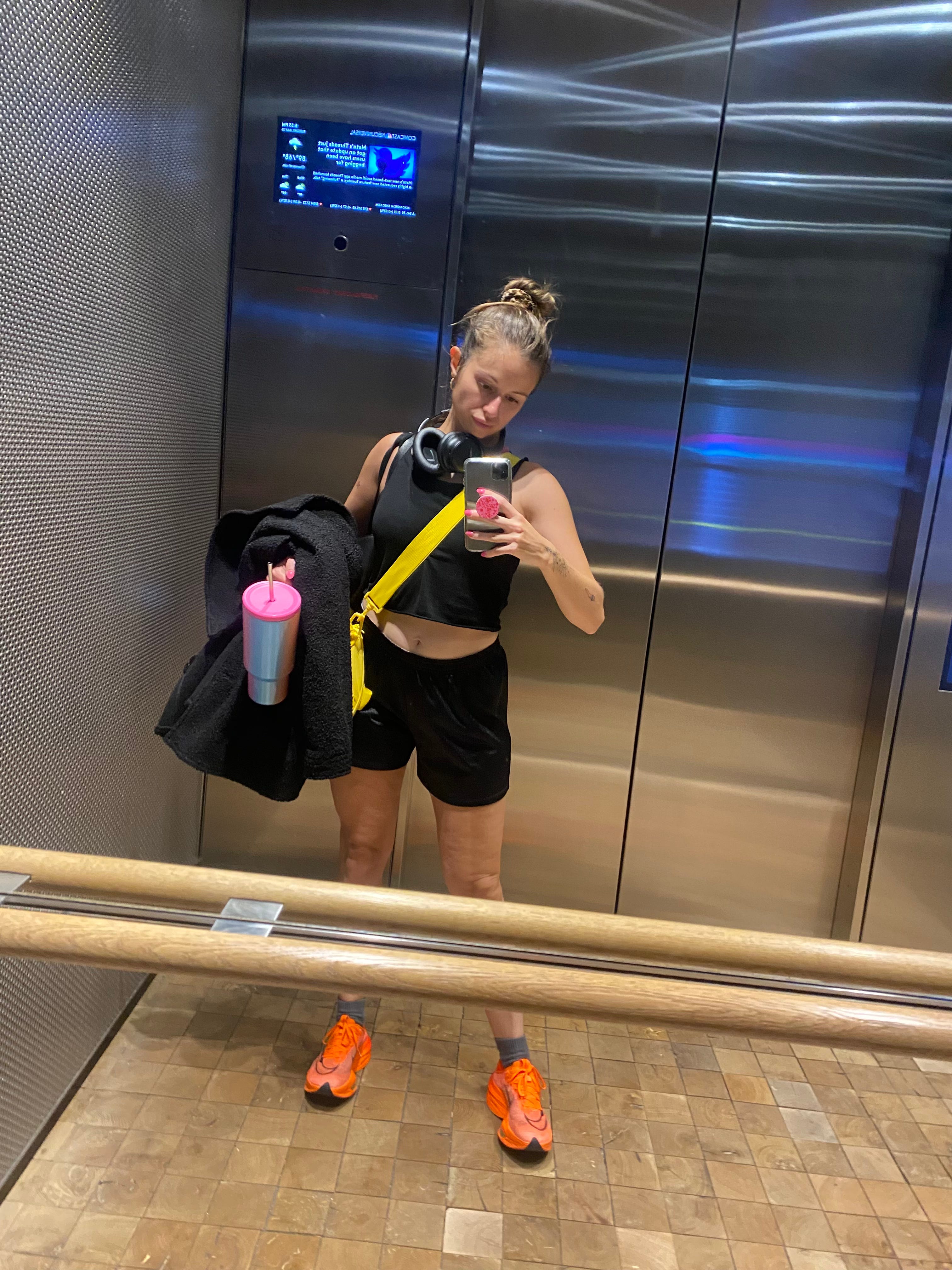
D: I get it all the time. I’m always compelled to let people know the truth of doing it all, which is that it kind of sucks. People ask me: how do you do all this? And it’s like, well, I’m having a hard time. I’m struggling mentally and temporally to find the time to do everything I want to do. And that’s not fun. It’s interesting that you even have that perception – I think you just inherently understand, from having been a writer on top of a full-time worker that balancing so many things is actually hard.
V: When I have a child, I’m just going to tell everyone to shut the fuck up.
D: And you’ll be in your right to do so.
V: What’s the most unexpectedly beautiful thing about your second pregnancy?
D: That my child seems to understand that I’m pregnant. She is just constantly hugging my stomach and kissing my belly, and she actually seems to get it. I would never expect a 15-month-old to understand that she has a sibling coming, and maybe I’m just being romantic about it, but she seems to know.
V: Beautiful. What’s next for Broke but Moisturized, and for you as a writer?
D: I’m going to get better at putting out more fully free work. I have some things lined up that I want to write about. I’m just trying to be a little bit more casual in that sense, because I always feel like if I’m going to put something out that’s fully free to my whole audience, it needs to hit, to be almost serious in nature and the subject matter. But I don’t want it to be that way anymore. I’m going to be a little bit more creative in what I’m writing to my whole audience, because I think that’s important, and it’ll give me an opportunity to expand past the diaries and keep growing as a writer.
And just what’s next for me as a writer – that’s between me and God. I really don’t know. I have some exciting projects coming out. Something next for me as a writer is learning how to pitch and actually understanding the mechanics of legacy media, getting a little bit more savvy, and maybe getting some work out in the real world.
V: What are you watching and reading right now?
D: Well, I’m reading A Good Man Is Hard to Find by Flannery O’Connor. I’m reading that right now. I’ve been watching the Burning Man docuseries on HBO, because I have a really strange interest in it as one of the last sort of subcultural pillars. I have an interest in Silicon Valley, libertarian tech culture, and how these people live and think. Burning Man gives a nice little peek into it. So it’s been interesting seeing how it unfolds in the festival space, because I used to be a big festivalgoer. It’s funny you brought up Sam Kriss, I feel like he’s been so fun to read about SF. He’s such a good critic of that culture.
V: I’m writing about tech right now. But very mildly and not too offensively. I want to keep myself available to sell out to OpenAI if the opportunity presents itself. The check has to be big though.
D: I’m pro selling out. That can be on the record. I’m pro selling out.
That can be on the record. I’m pro selling out.
V: Me too. I think the people that are really anti-selling out are the people that never had to. Take the check.
D: Please and thank you. It’s freedom. It’s how you become free to do the craft. And I want to buy the time to write all the time and be a mom. If I could just break my life into writing and my relationships as two central components, I absolutely would.
V: Artists always had patrons. It’s not new. Selling out is an ancient practice. Thank you, Dia, for your time, and your vibrant, true to who you are, beautiful, genius in the flesh, magnetic, eccentric mind and essence.
More of The Grit:


mother convention 🫰🏼
Reading this felt like taking the red pill